

Streamlining Wine Quality Control with Automation
Streamlining Wine Quality Control with Automation
New Zealand’s wine industry is a global success story, with exports surpassing NZD $2 billion annually and a reputation for premium quality. From Marlborough’s Sauvignon Blanc to Central Otago’s Pinot Noir, winemakers face increasing pressure to maintain consistency, meet stringent export standards, and optimize production efficiency.
At the heart of this challenge lies quality control—specifically, the precise measurement of parameters like pH, total acidity, and sulfur dioxide (SO2). Traditional manual titration methods, while reliable, are time-consuming, prone to human error, and ill-suited to the demands of modern winemaking.
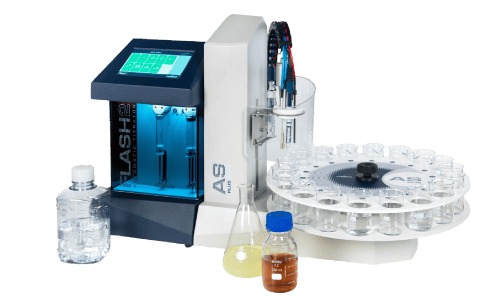
Enter automation. The Flash2 Automatic Titrator, developed by Steroglass in Italy, offers a compact, user-friendly solution to streamline wine quality control. This white paper explores how automated titration can transform winery operations, drawing on the Flash2’s capabilities to deliver precision, efficiency, and scalability for New Zealand’s winemakers.
New Zealand’s wine industry is a global success story, with exports surpassing NZD $2 billion annually and a reputation for premium quality. From Marlborough’s Sauvignon Blanc to Central Otago’s Pinot Noir, winemakers face increasing pressure to maintain consistency, meet stringent export standards, and optimize production efficiency.
At the heart of this challenge lies quality control—specifically, the precise measurement of parameters like pH, total acidity, and sulfur dioxide (SO2). Traditional manual titration methods, while reliable, are time-consuming, prone to human error, and ill-suited to the demands of modern winemaking.
Enter automation. The Flash2 Automatic Titrator, developed by Steroglass in Italy, offers a compact, user-friendly solution to streamline wine quality control. This white paper explores how automated titration can transform winery operations, drawing on the Flash2’s capabilities to deliver precision, efficiency, and scalability for New Zealand’s winemakers.

The Quality Control Challenge in Winemaking
Winemaking is both an art and a science, but quality control is unequivocally scientific. Key parameters—pH, total acidity, free and total SO2, volatile acidity, and more—must be monitored at every stage, from fermentation to bottling. These measurements ensure flavour stability, microbial safety, and compliance with international regulations (e.g., EU and US export standards). For New Zealand’s 700+ wineries, many of which are small to medium-sized operations, the stakes are high: a single batch failure can cost thousands in lost product and damage a brand’s reputation.
Manual titration, the traditional approach, involves pipetting samples, adding reagents, and determining endpoints by eye or basic instruments. This process is labor-intensive, requiring trained staff and hours of repetitive work—time better spent on crafting exceptional wine. Moreover, inconsistencies in technique can lead to variability, undermining the precision that export markets demand. As production scales and harvest seasons intensify, these inefficiencies become bottlenecks.
The Quality Control Challenge in Winemaking
Winemaking is both an art and a science, but quality control is unequivocally scientific. Key parameters—pH, total acidity, free and total SO2, volatile acidity, and more—must be monitored at every stage, from fermentation to bottling. These measurements ensure flavour stability, microbial safety, and compliance with international regulations (e.g., EU and US export standards). For New Zealand’s 700+ wineries, many of which are small to medium-sized operations, the stakes are high: a single batch failure can cost thousands in lost product and damage a brand’s reputation.
Manual titration, the traditional approach, involves pipetting samples, adding reagents, and determining endpoints by eye or basic instruments. This process is labor-intensive, requiring trained staff and hours of repetitive work—time better spent on crafting exceptional wine. Moreover, inconsistencies in technique can lead to variability, undermining the precision that export markets demand. As production scales and harvest seasons intensify, these inefficiencies become bottlenecks.
The Case for Automation
Automated titration addresses these pain points by combining precision, speed, and simplicity. The Flash2 Automatic Titrator exemplifies this shift, offering:
Accuracy: High-resolution sensors and automated endpoint detection eliminate human error, ensuring repeatable results (e.g., pH to ±0.01, SO2 to ±1 mg/L).
Speed: A single analysis—say, total acidity—takes minutes, not hours, freeing staff for higher-value tasks.
Ease of Use: A touchscreen interface and pre-programmed methods (e.g., oenological analyses) require minimal training, making it accessible to small teams.
For New Zealand wineries, automation isn’t just a luxury—it’s a competitive edge. With harvest windows tightening and export volumes growing, tools like the Flash2 enable producers to maintain quality without sacrificing efficiency.
The Case for Automation
Automated titration addresses these pain points by combining precision, speed, and simplicity. The Flash2 Automatic Titrator exemplifies this shift, offering:
Accuracy: High-resolution sensors and automated endpoint detection eliminate human error, ensuring repeatable results (e.g., pH to ±0.01, SO2 to ±1 mg/L).
Speed: A single analysis—say, total acidity—takes minutes, not hours, freeing staff for higher-value tasks.
Ease of Use: A touchscreen interface and pre-programmed methods (e.g., oenological analyses) require minimal training, making it accessible to small teams.
For New Zealand wineries, automation isn’t just a luxury—it’s a competitive edge. With harvest windows tightening and export volumes growing, tools like the Flash2 enable producers to maintain quality without sacrificing efficiency.
Flash 2 in Action
Consider a mid-sized winery producing 50,000 liters of Pinot Noir annually. During harvest, the quality control team tests 20 samples daily for pH, acidity, and SO2 to monitor fermentation and sulfite levels. Using manual titration, each test takes 15–20 minutes, totaling 5–7 hours of lab time daily. With the Flash2, the same tests are completed in 3–5 minutes each, reducing lab time to under 2 hours—a 70% efficiency gain. Over a 6-week harvest, this saves 150+ hours, equivalent to NZD $4,500 in labor costs (at $30/hour).
Beyond time savings, the Flash 2’s precision ensures consistency. Export markets like the UK and US enforce strict SO2 limits (e.g., 200 mg/L for reds). Manual methods risk overshooting or undershooting, but the Flash2’s automated dosing and detection keep levels exact, reducing compliance risks and rework.
For smaller boutique producers—say, a 10,000-liter operation—the Flash2’s compact design (fitting on a benchtop) and affordability make advanced technology accessible. Its ability to store data and generate reports also simplifies record-keeping for audits, a growing concern as sustainability certifications (e.g., Sustainable Winegrowing NZ) gain traction.
Flash 2 in Action
Consider a mid-sized winery producing 50,000 liters of Pinot Noir annually. During harvest, the quality control team tests 20 samples daily for pH, acidity, and SO2 to monitor fermentation and sulfite levels. Using manual titration, each test takes 15–20 minutes, totaling 5–7 hours of lab time daily. With the Flash 2, the same tests are completed in 3–5 minutes each, reducing lab time to under 2 hours—a 70% efficiency gain. Over a 6-week harvest, this saves 150+ hours, equivalent to NZD $4,500 in labor costs (at $30/hour).
Beyond time savings, the Flash2’s precision ensures consistency. Export markets like the UK and US enforce strict SO2 limits (e.g., 200 mg/L for reds). Manual methods risk overshooting or undershooting, but the Flash 2’s automated dosing and detection keep levels exact, reducing compliance risks and rework.
For smaller boutique producers say, a 10,000-liter operation the Flash2’s compact design (fitting on a benchtop) and affordability make advanced technology accessible. Its ability to store data and generate reports also simplifies record-keeping for audits, a growing concern as sustainability certifications (e.g., Sustainable Winegrowing NZ) gain traction.
Conclusion: The Future of Quality Control
New Zealand’s wine industry thrives on innovation, from vineyard techniques to cellar practices. The Flash2 Automatic Titrator brings that spirit to quality control, offering a tool that’s as precise as it is practical. For wineries aiming to scale, compete globally, or simply perfect their craft, automation isn’t a trend—it’s a necessity.
Scienze invites winemakers, lab managers, and industry professionals to experience the Flash2 firsthand. Contact us at 0800 724 633 or info@scienze.nz to schedule a free demo or request a trial unit.
Conclusion: The Future of Quality Control
New Zealand’s wine industry thrives on innovation, from vineyard techniques to cellar practices. The Flash2 Automatic Titrator brings that spirit to quality control, offering a tool that’s as precise as it is practical. For wineries aiming to scale, compete globally, or simply perfect their craft, automation isn’t a trend—it’s a necessity.
Scienze invites winemakers, lab managers, and industry professionals to experience the Flash2 firsthand. Contact us at 0800 724 633 or info@scienze.nz to schedule a free demo or request a trial unit.

Need more information / Questions?
Need more information / Questions?
Please contact us by phone or email:
Freephone 0800 724 633
Or use the contact form below:

A to Z Product Listing
A to Z Product Listing
Copyright © 2026, Scienze. All rights reserved.