

Milk and Dairy Products:
What is the best approach
to Hygiene Monitoring?
Milk and Dairy Products:
What is the best approach
to Hygiene Monitoring?

An effective and accurate approach to hygiene monitoring is essential in every area of the food production industry. It is no surprise then that concerns surrounding conventional methodologies have become a major talking point, with a growing number of sites questioning the unreliable and confusing results generated by their ATP testing.
Although this is an industry-wide problem, sites that handle milk and dairy products are particularly affected, with ATP levels dramatically impacted by their processes. In the interest of securing more accurate results, many factories within the Dairy Products sector are making the switch to a more sensitive and reliable approach: the A3 system.
To help you decide on the next steps for your own site, we have created a guide that answers the key questions surrounding Hygiene Monitoring in relation to the production of milk and dairy products. In this article we will cover the areas listed below. There is helpful content in each section, but you can also use the links to skip to the subject most relevant to your site.
An effective and accurate approach to hygiene monitoring is essential in every area of the food production industry. It is no surprise then that concerns surrounding conventional methodologies have become a major talking point, with a growing number of sites questioning the unreliable and confusing results generated by their ATP testing.
Although this is an industry-wide problem, sites that handle milk and dairy products are particularly affected, with ATP levels dramatically impacted by their processes. In the interest of securing more accurate results, many factories within the Dairy Products sector are making the switch to a more sensitive and reliable approach: the A3 system.
To help you decide on the next steps for your own site, we have created a guide that answers the key questions surrounding Hygiene Monitoring in relation to the production of milk and dairy products. In this article we will cover the areas listed below. There is helpful content in each section, but you can also use the links to skip to the subject most relevant to your site.
A comparison of the two most popular
methods of Hygiene Monitoring
A comparison of the two most popular methods of Hygiene Monitoring
Conventional ATP tests
ATP tests are commonly used to detect organic residue on a surface or piece of equipment, with this organic residue acting as an ideal breeding ground for bacteria. The logic behind these tests is that ATP (adenosine triphosphate) is a molecule found in all living cells. Consequently, if a surface fails an ATP test, this indicates the presence of organic residue. However, it is a common misconception that if a surface passes an ATP test it is free from organic residue and is no longer a food safety risk.
Instead, the limitations of a conventional ATP test render it insufficient as soon as processes like cleaning, heating, and fermentation have taken place. This is because ATP is an unstable molecule that degrades during these processes to become AMP and ADP. As the name suggests, AMP and ADP aren’t the target molecules for ATP-only assessments, so a conventional test will be unable to detect them. Instead, a system capable of detecting all three adenosine molecules is required. This is why the Kikkoman Biochemifa Company launched the A3 system in 2017.
Conventional ATP tests
ATP tests are commonly used to detect organic residue on a surface or piece of equipment, with this organic residue acting as an ideal breeding ground for bacteria. The logic behind these tests is that ATP (adenosine triphosphate) is a molecule found in all living cells. Consequently, if a surface fails an ATP test, this indicates the presence of organic residue. However, it is a common misconception that if a surface passes an ATP test it is free from organic residue and is no longer a food safety risk.
Instead, the limitations of a conventional ATP test render it insufficient as soon as processes like cleaning, heating, and fermentation have taken place. This is because ATP is an unstable molecule that degrades during these processes to become AMP and ADP. As the name suggests, AMP and ADP aren’t the target molecules for ATP-only assessments, so a conventional test will be unable to detect them. Instead, a system capable of detecting all three adenosine molecules is required. This is why the Kikkoman Biochemifa Company launched the A3 system in 2017.

Only Kikkoman’s new LuciPac A3 Sanitation System detects ATP+ADP+AMP with one swab to give you the whole picture. Its patented A3 Technology has been proven to detect residues and microorganisms that others miss.
Only Kikkoman’s new LuciPac A3 Sanitation System detects ATP+ADP+AMP with one swab to give you the whole picture. Its patented A3 Technology has been proven to detect residues and microorganisms that others miss.
The A3 System
Although it is an advancement on conventional ATP tests, the A3 system is just as easy to use. The first step is to swab the relevant test point with your choice of Surface Swabs, Water Swabs, or Pre-moistened Surface Swabs.
The swab should then be placed inside the system’s lightweight, app based, handheld, auto calibrated device – with this device generating your reading in around ten seconds.
This will be a familiar process to anyone who has used a conventional ATP test before; however, the key difference is that the A3 swabs introduce recycling enzymes that allow for conversion between all three adenosine molecules. This makes it possible for the A3 system to generate a reading that reflects the total organic residue covering a surface, as opposed to just the levels of ATP.
The A3 System
Although it is an advancement on conventional ATP tests, the A3 system is just as easy to use. The first step is to swab the relevant test point with your choice of Surface Swabs, Water Swabs, or Pre-moistened Surface Swabs.
The swab should then be placed inside the system’s lightweight, app based, handheld, auto calibrated device – with this device generating your reading in around ten seconds.
This will be a familiar process to anyone who has used a conventional ATP test before; however, the key difference is that the A3 swabs introduce recycling enzymes that allow for conversion between all three adenosine molecules. This makes it possible for the A3 system to generate a reading that reflects the total organic residue covering a surface, as opposed to just the levels of ATP.
How different are the results produced by
conventional ATP tests and A3 technology?
How different are the results produced by conventional ATP tests and A3 technology?
Now that we have established the key differences between conventional ATP tests and the more sensitive A3 system, it’s important to explore the extent to which results can differ between the two methodologies. The Kikkoman Biochemifa Company carried out extensive testing to determine this – using the A3 system and conventional ATP tests to detect a wide range of organic residue.
Now that we have established the key differences between conventional ATP tests and the more sensitive A3 system, it’s important to explore the extent to which results can differ between the two methodologies. The Kikkoman Biochemifa Company carried out extensive testing to determine this – using the A3 system and conventional ATP tests to detect a wide range of organic residue.

Figure One (above) provides a direct comparison of the A3 system and the traditional ATP approach when testing six popular dairy products. As you can see, in all six instances, the readings generated by the A3 system were more than double the readings generated by the ATP tests. This suggests that depending on the pass/fail limits of a site, there is every chance that the ATP tests would be passing surfaces in say an ice-cream factory or a cheddar cheese production site, with only the A3 system capable of detecting the organic residue that still needs to be removed.
Figure One (above) provides a direct comparison of the A3 system and the traditional ATP approach when testing six popular dairy products. As you can see, in all six instances, the readings generated by the A3 system were more than double the readings generated by the ATP tests. This suggests that depending on the pass/fail limits of a site, there is every chance that the ATP tests would be passing surfaces in say an ice-cream factory or a cheddar cheese production site, with only the A3 system capable of detecting the organic residue that still needs to be removed.

Figure Two (above) presents this information in a table that also includes the ratio of A3 to ATP for each of the tests. There are significant differences for each product, but there are also stand-out items such as yogurt and Camembert cheese. This further illustrates the argument that the ability to detect all three adenosine molecules is valuable in any regard, but an enhanced system becomes absolutely crucial when a product has undergone processes like fermentation.
Figure Two (above) presents this information in a table that also includes the ratio of A3 to ATP for each of the tests. There are significant differences for each product, but there are also stand-out items such as yogurt and Camembert cheese. This further illustrates the argument that the ability to detect all three adenosine molecules is valuable in any regard, but an enhanced system becomes absolutely crucial when a product has undergone processes like fermentation.

Figure Three (above) supports these findings, with the Kikkoman Biochemifa Company offering a direct comparison of the LuciPac A3 system and two key competitors: the Hygiena and the 3M. Again, the difference in readings is instantly apparent. It is also clear that the processes a product has undergone can intensify these differences. For example, when looking at the results for portion milk, which has not been fermented, the A3 reading is 1,000 RLU, the 3M is just over 100 RLU, and the Hygiena is just over 10 RLU. Even these discrepancies are extreme, but when you look at the results for fermented cheese, this goes one step further. The A3 system detects a reading of nearly 10,000 RLU, the 3M generates a reading of just over 10 RLU, and the Hygiena doesn’t register.
Figure Three (above) supports these findings, with the Kikkoman Biochemifa Company offering a direct comparison of the LuciPac A3 system and two key competitors: the Hygiena and the 3M. Again, the difference in readings is instantly apparent. It is also clear that the processes a product has undergone can intensify these differences. For example, when looking at the results for portion milk, which has not been fermented, the A3 reading is 1,000 RLU, the 3M is just over 100 RLU, and the Hygiena is just over 10 RLU. Even these discrepancies are extreme, but when you look at the results for fermented cheese, this goes one step further. The A3 system detects a reading of nearly 10,000 RLU, the 3M generates a reading of just over 10 RLU, and the Hygiena doesn’t register.

Figure Four (above) is another helpful resource, especially for production sites that either produce or handle chocolate. Here, the testing introduces an additional dairy product to the discussion, with the A3 system producing a reading of just under 5,000 RLU for a surface that has been exposed to chocolate. In contrast, the ATP tests generated a reading that sits well below 500 RLU. Once again, these results suggest ATP tests could be passing surfaces that are in need of further cleaning.
Figure Four (above) is another helpful resource, especially for production sites that either produce or handle chocolate. Here, the testing introduces an additional dairy product to the discussion, with the A3 system producing a reading of just under 5,000 RLU for a surface that has been exposed to chocolate. In contrast, the ATP tests generated a reading that sits well below 500 RLU. Once again, these results suggest ATP tests could be passing surfaces that are in need of further cleaning.

Finally, Figure Five (above) presents the results of a sensitivity study of rapid hygiene monitoring for the detection of allergenic foods. For this round of testing, food products that are considered allergens across the USA, Canada, EU, or Asia were homogenised and serially diluted with water. The samples were then applied to A3 test swabs (plotted in red), ATP test swabs (plotted in black) and protein test swabs (plotted in purple).
When compared to ATP tests, the A3 system displayed a heightened sensitivity in all areas, and when compared to the protein swabs, its detection limits were superior in most cases. In fact, the results of the protein swabs were only comparable for: milk, ice cream, whole egg, and wheat. As an extracted animal protein, gelatin was the only area where a protein swab test proved superior.
Finally, Figure Five (above) presents the results of a sensitivity study of rapid hygiene monitoring for the detection of allergenic foods. For this round of testing, food products that are considered allergens across the USA, Canada, EU, or Asia were homogenised and serially diluted with water. The samples were then applied to A3 test swabs (plotted in red), ATP test swabs (plotted in black) and protein test swabs (plotted in purple).
When compared to ATP tests, the A3 system displayed a heightened sensitivity in all areas, and when compared to the protein swabs, its detection limits were superior in most cases. In fact, the results of the protein swabs were only comparable for: milk, ice cream, whole egg, and wheat. As an extracted animal protein, gelatin was the only area where a protein swab test proved superior.
Why is A3 technology especially suited to sites that handle milk and dairy products?
Why is A3 technology especially suited to sites that handle milk and dairy products?
A3 technology and allergen testing
With milk included in the top 14 food allergens, your site’s ability to accurately detect the presence of organic residue is absolutely crucial. Although the A3 system does not test for specific allergens and should not be relied upon for this, it provides a far more sensitive method for the detection of organic residue than conventional ATP tests. This enhanced approach to Hygiene Monitoring has the potential to reduce your allergen swabbing requirements. After all, if a surface is free from organic residue, it follows that there isn’t any residue left to contaminate. This is something the Scienze team can help you to validate.
A3 technology and allergen testing
With milk included in the top 14 food allergens, your site’s ability to accurately detect the presence of organic residue is absolutely crucial. Although the A3 system does not test for specific allergens and should not be relied upon for this, it provides a far more sensitive method for the detection of organic residue than conventional ATP tests. This enhanced approach to Hygiene Monitoring has the potential to reduce your allergen swabbing requirements. After all, if a surface is free from organic residue, it follows that there isn’t any residue left to contaminate. This is something the Scienze team can help you to validate.

On the subject of allergen control, it is also worth noting that we have a new range of Rapid Allergen Test Kits for: Egg (Ovalbumin), Casein, Gluten, Soya, Peanut, Crustacean, and Buckwheat.
On the subject of allergen control, it is also worth noting that we have a new range of Rapid Allergen Test Kits for: Egg (Ovalbumin), Casein, Gluten, Soya, Peanut, Crustacean, and Buckwheat.
A3 technology and fermentation
Fermentation is understood as the metabolic process that converts organic molecules, such as glucose, into acids, gases, or alcohol. This process yields just two ATP per glucose molecule. To give an idea of how low this is, aerobic respiration typically yields as many as 32 molecules of ATP per glucose molecule. This helps to explain why conventional ATP tests fail to detect the organic residue of products that have undergone fermentation, with ATP levels dropping dramatically throughout the process.
The impact of fermentation on ATP is especially important when it comes to milk and dairy production sites, as many milk products rely on fermentation, most commonly with two specific types of bacteria: Lactobacilli and Bifidobacteria. Examples include: cheese with a hard or semi-hard exterior, kefir, buttermilk, Greek yogurt, and most commercial yogurts.
It is also worth noting that products such as Kefir and yogurt both consist of milk fermented with beneficial bacteria. This makes it all the more important that any unwanted organic residue is detected. Otherwise, as a breeding ground for bacteria, this organic residue could impact the properties of your dairy products, with the potential to disrupt the taste, appearance, and even the safety of your output.
A3 technology and handwashing
With a growing number of sites favouring clean, bare hands over food contact approved gloves, handwashing checks are becoming increasingly important across the food production industry. This is another area where A3 technology could benefit your milk and dairy production site.
Firstly, the system could help you to identify operatives who are not yet ready to start work, with their hands in need of further cleaning. Instead of making the journey to an in-house laboratory or even waiting on external testing, you can find out this information on-the-spot. This will allow you to take the relevant steps before your product is exposed to potentially harmful bacteria.
As well as empowering milk and dairy sites to share immediate improvement guidance with their operatives, the A3 system can also help factories to establish the most effective approach to handwashing. With results available in ten seconds and automatically turned into graphs via the Lumitester App, you will be able to identify the method, length of time, and cleaning solution that is best suited to the removal of organic residue.
A3 technology and fermentation
Fermentation is understood as the metabolic process that converts organic molecules, such as glucose, into acids, gases, or alcohol. This process yields just two ATP per glucose molecule. To give an idea of how low this is, aerobic respiration typically yields as many as 32 molecules of ATP per glucose molecule. This helps to explain why conventional ATP tests fail to detect the organic residue of products that have undergone fermentation, with ATP levels dropping dramatically throughout the process.
The impact of fermentation on ATP is especially important when it comes to milk and dairy production sites, as many milk products rely on fermentation, most commonly with two specific types of bacteria: Lactobacilli and Bifidobacteria. Examples include: cheese with a hard or semi-hard exterior, kefir, buttermilk, Greek yogurt, and most commercial yogurts.
It is also worth noting that products such as Kefir and yogurt both consist of milk fermented with beneficial bacteria. This makes it all the more important that any unwanted organic residue is detected. Otherwise, as a breeding ground for bacteria, this organic residue could impact the properties of your dairy products, with the potential to disrupt the taste, appearance, and even the safety of your output.
A3 technology and handwashing
With a growing number of sites favouring clean, bare hands over food contact approved gloves, handwashing checks are becoming increasingly important across the food production industry. This is another area where A3 technology could benefit your milk and dairy production site.
Firstly, the system could help you to identify operatives who are not yet ready to start work, with their hands in need of further cleaning. Instead of making the journey to an in-house laboratory or even waiting on external testing, you can find out this information on-the-spot. This will allow you to take the relevant steps before your product is exposed to potentially harmful bacteria.
As well as empowering milk and dairy sites to share immediate improvement guidance with their operatives, the A3 system can also help factories to establish the most effective approach to handwashing. With results available in ten seconds and automatically turned into graphs via the Lumitester App, you will be able to identify the method, length of time, and cleaning solution that is best suited to the removal of organic residue.
How do I roll out the A3 system?
Scienze provides ongoing support for the implementation and use of A3 technology. Throughout the process, we can help you to:
- Establish personalised benchmarks
- Select the right swabs for your site
- Identify the relevant testing points
- Train and engage your operatives
- Set up and use the Lumitester App
- Establish a handwashing procedure
- Create Validation Documents to share with your auditors during an inspection
- Find out if it is possible for your site to safely reduce its use of allergen swabs
How do I roll out the A3 system?
Scienze provides ongoing support for the implementation and use of A3 technology. Throughout the process, we can help you to:
- Establish personalised benchmarks
- Select the right swabs for your site
- Identify the relevant testing points
- Train and engage your operatives
- Set up and use the Lumitester App
- Establish a handwashing procedure
- Create Validation Documents to share with your auditors during an inspection
- Find out if it is possible for your site to safely reduce its use of allergen swabs
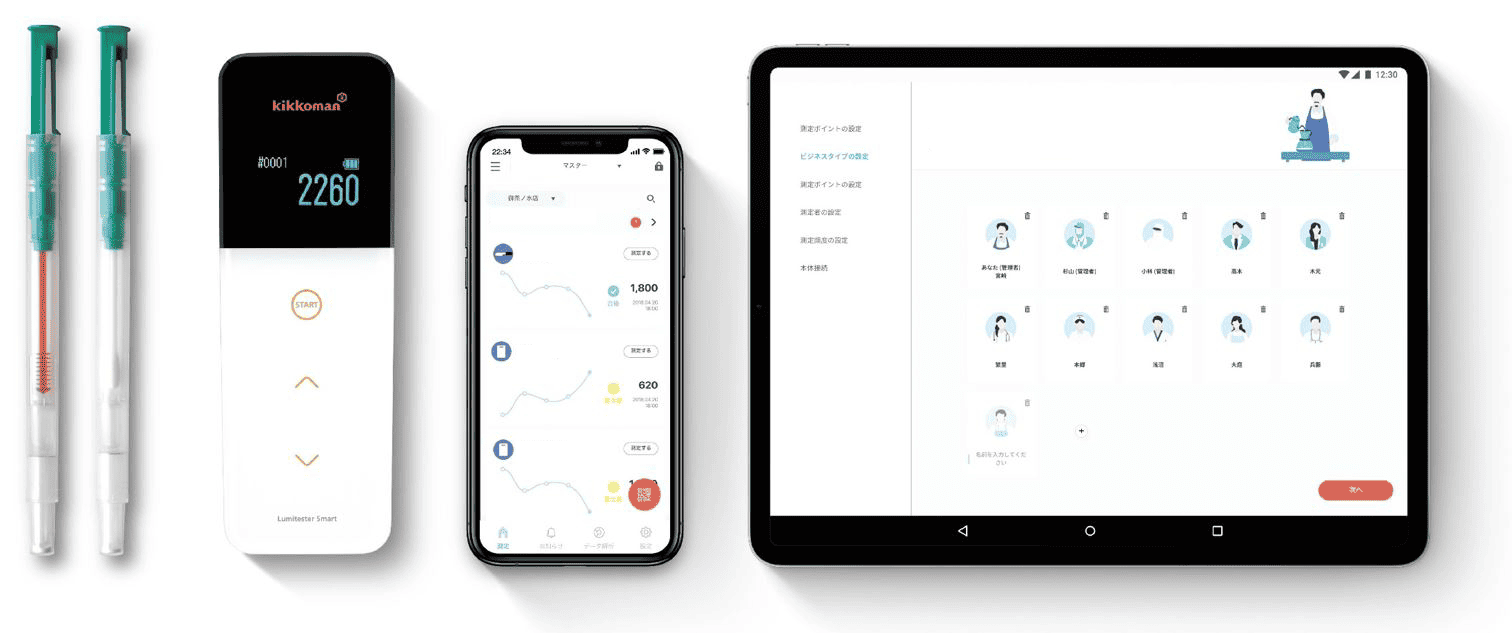
The Lumitester App will be another valuable resource, as it can be used to store the data gathered through your A3 testing. Promoting accuracy and accountability, the app automatically turns inspection pass rates into graphs and records every test alongside the date it took place and the operative responsible. Once you have this data, there is the option of downloading it onto Microsoft Excel. Alternatively, if you would like to access it at any time from anywhere in the world, you also have the option of storing it in the cloud.
- Upload results to the cloud via Bluetooth and PC connection
- Set test points and benchmark values
- Display time-series data for each test
- Track overall inspection scores, with graphs
- Access results 24/7 – from any device, anywhere.
The Lumitester App will be another valuable resource, as it can be used to store the data gathered through your A3 testing. Promoting accuracy and accountability, the app automatically turns inspection pass rates into graphs and records every test alongside the date it took place and the operative responsible. Once you have this data, there is the option of downloading it onto Microsoft Excel. Alternatively, if you would like to access it at any time from anywhere in the world, you also have the option of storing it in the cloud.
- Upload results to the cloud via Bluetooth and PC connection
- Set test points and benchmark values
- Display time-series data for each test
- Track overall inspection scores, with graphs
- Access results 24/7 – from any device, anywhere.

Lumitester Smart App
Easy to use App for keeping track of your Hygiene monitoring results. Helps see trends in production and various cleaning activities, identifying issues that can be corrected, before they become serious issues saving time and money...
Lumitester Smart App
Easy to use App for keeping track of your Hygiene monitoring results. Helps see trends in production and various cleaning activities, identifying issues that can be corrected, before they become serious issues saving time and money...
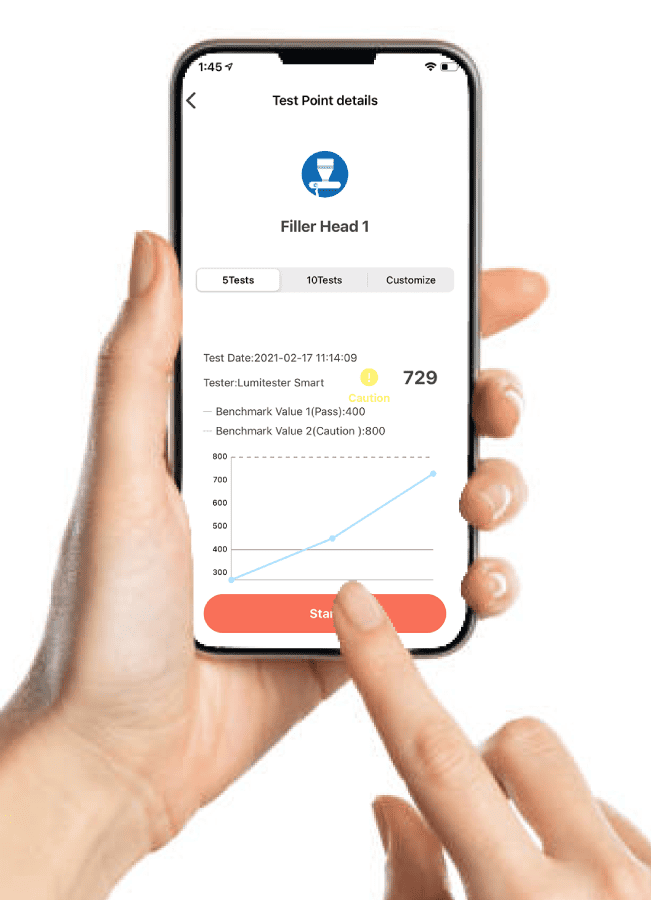
Easily view historical data to identify trends and address problematic test points.

Set up test points with pre-defined or customized benchmark values.

View multiple sample points around the factory remotely using the Lumitester Smart App.
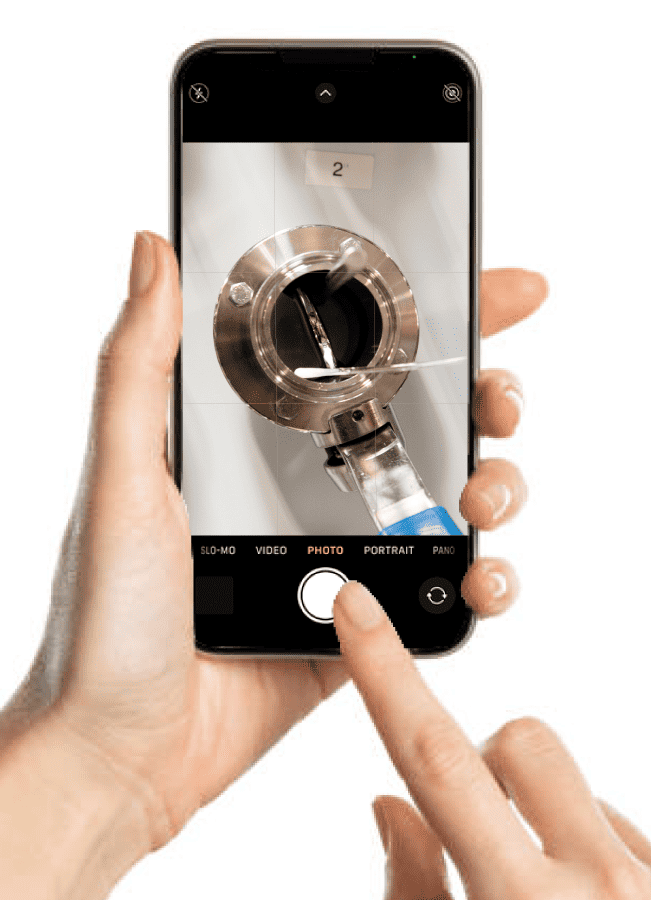
Use your phone to take a picture of your exact sample point and the take the guess work out of where to sample.
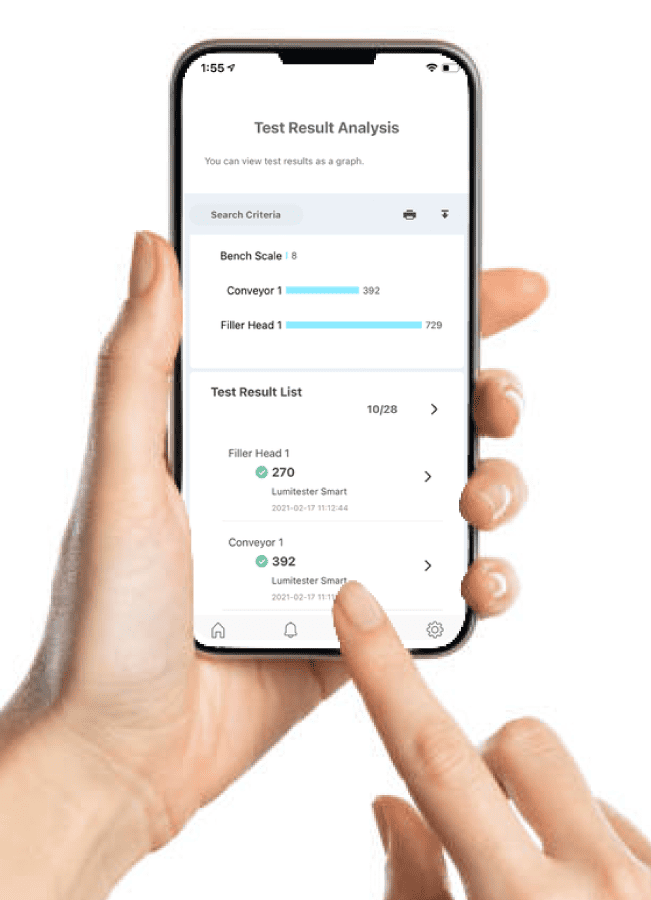
Customizable searches allow you to view specific test points, sample plans, and timeframes to easily analyze test results.
Frequently Asked Questions
So that brings us to the end of our guide to Hygiene Monitoring for sites that deal with the production of milk and dairy products. We hope this article has highlighted the importance of accurate hygiene monitoring within this sector and has outlined the risks associated with conventional ATP tests.
If you would like any further guidance in this area, the Scienze team would be happy to help with your enquiries. You can contact us on 0800 724 633 or info@scienze.nz
Frequently Asked Questions
So that brings us to the end of our guide to Hygiene Monitoring for sites that deal with the production of milk and dairy products. We hope this article has highlighted the importance of accurate hygiene monitoring within this sector and has outlined the risks associated with conventional ATP tests.
If you would like any further guidance in this area, the Scienze team would be happy to help with your enquiries. You can contact us on 0800 724 633 or info@scienze.nz
Seeing is Believing...Find out how this technology will work for your workflows, book a FREE online Demo today!
What to expect
We’ll have a chat about how the Lumitester SMART works for your workflows. Then we’ll run through key features and benefits of the Lumitester SMART and any questions you might have.
How long will it take?
Our demos usually last between 15 - 20 minutes, depending on how many questions you may have. We are very flexible with demo times and will work around your timeframe to our best ability.
What happens next?
If you would like to see how the Kikkoman technology could enhance your hygiene monitoring processes, simply call us on 0800 724 633 or email info@scienze.nz and let's make a day and time that suits your schedule for a FREE online demo! Enhance your sanitation program today with the best in the business! Call us today.
Seeing is Believing...Find out how this technology will work for your workflows, book a FREE online Demo today!
What to expect
We’ll have a chat about how the Lumitester SMART works for your workflows. Then we’ll run through key features and benefits of the Lumitester SMART and any questions you might have.
How long will it take?
Our demos usually last between 15 - 20 minutes, depending on how many questions you may have. We are very flexible with demo times and will work around your timeframe to our best ability.
What happens next?
If you would like to see how the Kikkoman technology could enhance your hygiene monitoring processes, simply call us on 0800 724 633 or email info@scienze.nz and let's make a day and time that suits your schedule for a FREE online demo! Enhance your sanitation program today with the best in the business! Call us today.
Need more information / Questions?
Need more information / Questions?
Please contact us by phone or email:
Freephone 0800 724 633
Or use the contact form below:

A to Z Product Listing
A to Z Product Listing
Copyright © 2026, Scienze. All rights reserved.